
Dayana Hassani: A Young Researcher Bridging International Invention Competitions, Scientific Research, and Technology Development
In recent years, concepts such as research, innovation, technology, and the knowledge-based economy have gained increasing prominence in discussions of national development. Against this backdrop, certain scientific achievements can represent more than a title or an award ceremony; they can offer a glimpse into the emergence of a new generation of Iranian researchers—one that is increasingly blurring the boundaries between academic research, invention, technology, and industry.
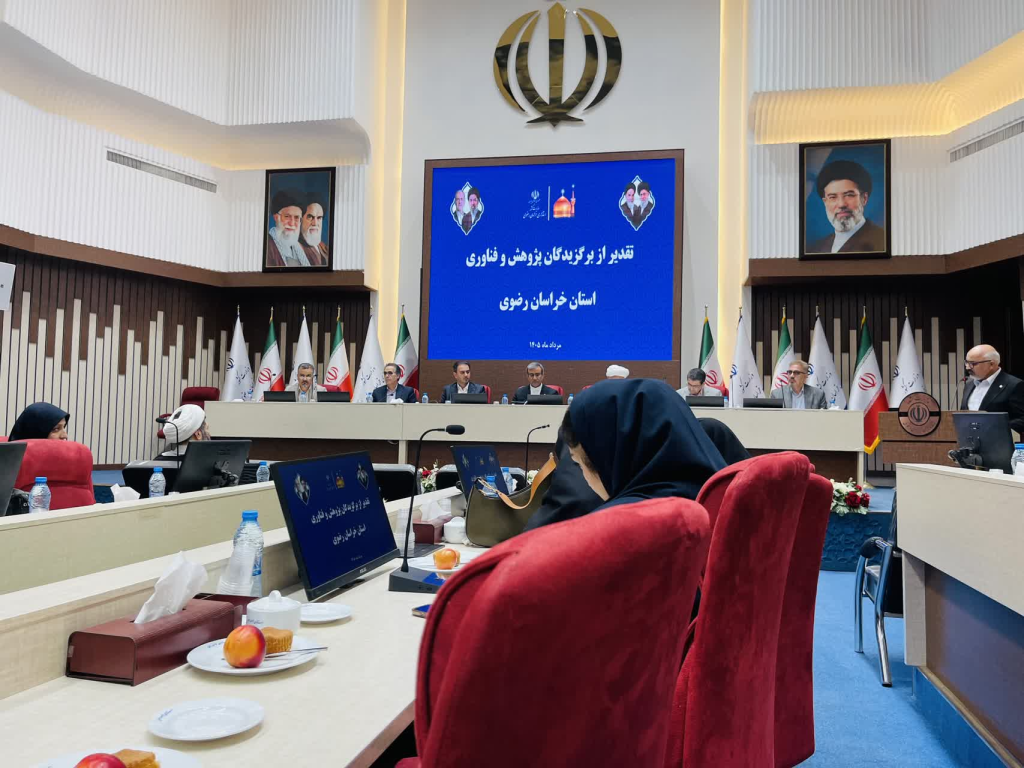
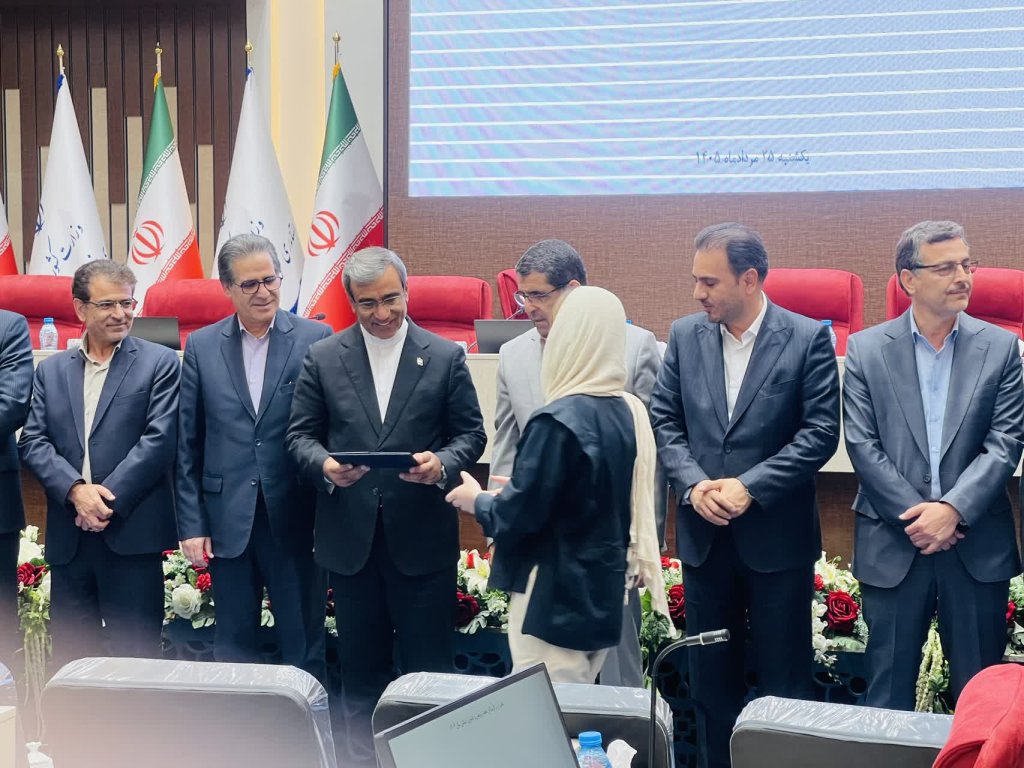
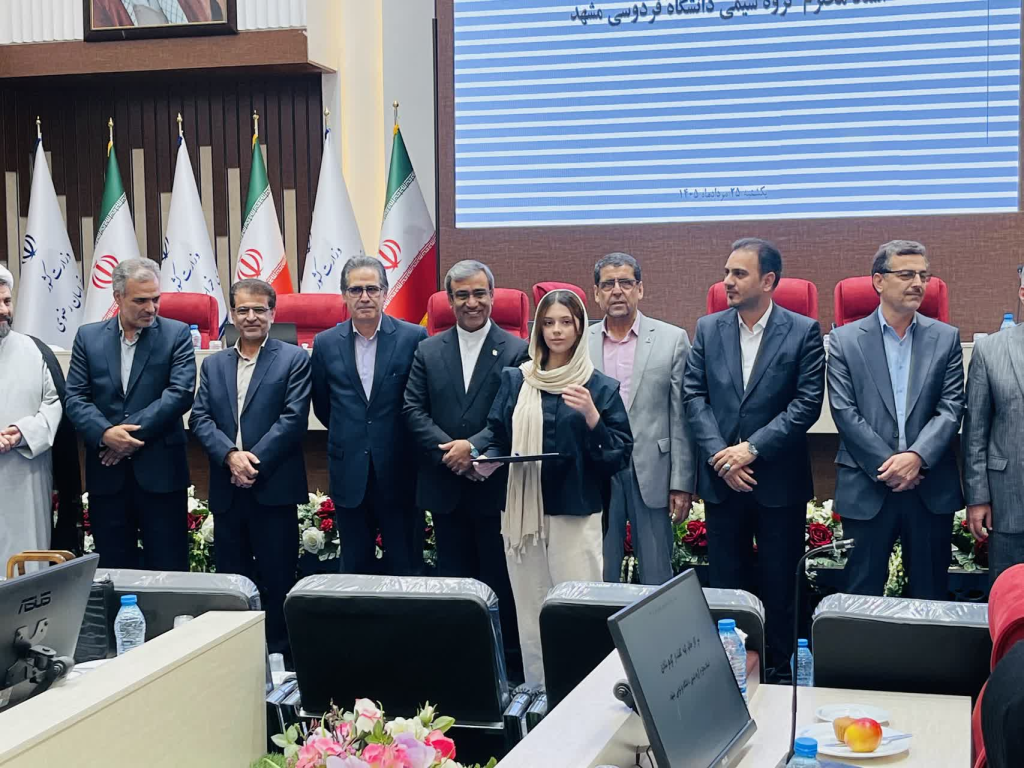
The selection of Dayana Hassani as a Top Researcher of Razavi Khorasan Province can be viewed from this perspective. The recognition was presented at a ceremony attended by senior provincial officials, university leaders, representatives of the Academic Center for Education, Culture and Research, Science and Technology Park officials, and members of the scientific and research community. Yet, the significance of this recognition lies less in the ceremony itself than in the journey that led to it.
Over recent years, Dayana Hassani has been active in research, technology, invention, and research and development. Part of her scientific achievements has also been presented and evaluated at international science and technology competitions and exhibitions.
From this perspective, being recognized as a top provincial researcher should not be viewed as an isolated achievement. Rather, it represents a continuation of a broader scientific journey encompassing participation in international competitions, involvement in research projects, scientific publications, specialized book authorship, and engagement in research and development activities.
The Archimedes Grand Prix: An International Milestone
One of the notable milestones in this journey was Dayana Hassani’s participation in the research team of the World Academy of Medical Sciences (WAMS) at the Archimedes International Invention and Innovation Exhibition and Competition in Russia in 2025.
The team’s project, which focused on a novel formulation for oral and mucoadhesive products based on pomegranate, received the Grand Prix, one of the highest distinctions awarded within the competition.
The significance of such an achievement extends beyond the title of the award itself. Participation in an international invention competition requires an idea to move beyond its initial concept and be developed into a documented, structured, and scientifically assessable project capable of being evaluated by international experts and judges.
In other words, there is a substantial gap between “having an idea” and “presenting a competitive innovation.” Bridging that gap requires research, experimentation, teamwork, scientific documentation, and the ability to communicate findings effectively.
For a young researcher, such an experience can become an important part of professional identity—not simply because of the award, but because it provides direct experience in solving problems and presenting scientific outcomes within an international competitive environment.
From Russia to Romania: A Continuing International Journey
Dayana Hassani’s international activities have not been limited to a single event. In 2025, she also participated as a member of the Iranian research team in an international science and invention competition in Romania, where she received a Gold Medal.
Her professional record also includes participation in various scientific and innovation events in different countries, as well as receiving several awards and distinctions from international scientific associations, institutions, and academic organizations.
However, the value of such achievements should not be measured solely by the number of medals or awards.
Their greater significance emerges when international participation becomes part of a sustained scientific trajectory and the experience gained from these events contributes to further research and development.
In this context, international awards can be regarded as components of a broader process through which a young researcher learns to define, document, present, and evaluate scientific ideas against international standards.
Beyond Medals: Building a Research Identity
If a researcher’s career is assessed solely by the number of publications, medals, or academic titles, an important part of the research process may remain unseen.
A more significant feature of Dayana Hassani’s professional journey is her simultaneous engagement in scientific research, innovation, and research and development—areas that are increasingly interconnected within today’s scientific and technological ecosystem.
Research can have greater impact when it addresses real-world challenges and responds to the needs of society and industry. Innovation, in turn, becomes more meaningful when it is supported by scientific evidence, development potential, and practical applicability. At the same time, industries require continuous research and development to maintain competitiveness.
This is where the role of the modern researcher begins to evolve. A researcher is no longer merely a producer of academic papers or a participant in competitions, but can also become a bridge connecting knowledge, technology, and practical application.
From Iran’s Natural Resources to Value-Generating Technologies
Another dimension of Dayana Hassani’s research activities involves areas such as natural compounds, health-oriented products, food technologies, and the utilization of plant-based resources.
Among the research projects associated with her scientific activities are topics related to pomegranate, barberry, and bioactive compounds derived from agricultural resources and agricultural processing by-products.
This direction is particularly relevant from an economic and developmental perspective. Iran possesses a wide range of agricultural resources, yet in many cases a substantial portion of their economic value remains at the raw-material stage.
Research focused on extracting valuable compounds, developing innovative products, and utilizing agricultural by-products and waste streams can contribute to increasing value added—particularly in regions with strong agricultural, food-processing, and industrial capacities.
Razavi Khorasan is especially significant in this regard. Its agricultural resources, food industries, universities, research centers, and technology ecosystem provide the potential to establish a meaningful connection between local resources, scientific knowledge, and technology-based products.
Within such a model, young researchers can play a role that goes beyond knowledge production and contribute to transforming local resources and challenges into scientific and technological solutions.
Scientific Publications and Books: Another Dimension of a Multidisciplinary Path
Alongside technological activities and participation in invention competitions, scientific publications and contributions to specialized books published by reputable international publishers represent another important dimension of Dayana Hassani’s professional development.
This is significant because it demonstrates that her trajectory is not confined to invention competitions and scientific exhibitions. Academic research and scientific knowledge production have developed alongside her technological activities.
One of the defining characteristics of the new generation of researchers is precisely this ability to move across different scientific environments: laboratories, universities, international competitions, global scientific networks, and research and development settings.
Such a combination can contribute to the development of an independent research identity—one in which academic publications and inventions are not separate paths, but can become interconnected stages in the journey from an initial idea to technological development.
Being a Top Researcher Is Not the End of the Journey
From this perspective, Dayana Hassani’s selection as a Top Researcher of Razavi Khorasan Province takes on a broader meaning.
The recognition comes at a point in her professional journey following experiences in international competitions, scientific achievements, research projects, scientific publications and books, and research and development activities.
Yet, being recognized as a top researcher should not be regarded as the conclusion of this journey.
On the contrary, such recognition can mark the beginning of a new stage—one in which expectations for knowledge creation, technological development, and measurable impact become even greater.
In leading scientific systems, the value of research is not determined solely by the number of publications or awards. The more important questions are whether research has addressed a real problem, contributed to the development of new technology, generated economic or social value, or ultimately improved some aspect of people’s lives.
From this perspective, the most important stage ahead for any young researcher is transforming existing scientific capital into sustainable and measurable outcomes.
Supporting Young Talent: A Critical Part of the Equation
The success of a young researcher cannot be attributed solely to individual effort. Families, teachers, mentors, research centers, laboratories, universities, technology organizations, and supportive policies all contribute to the development and continuation of a scientific career.
For this reason, recognizing outstanding researchers becomes more meaningful when such recognition leads to new opportunities—including access to research facilities, scientific networks, project support, industry partnerships, and resources for developing innovative ideas.
Otherwise, there is a risk that an important recognition will remain limited to a ceremony rather than becoming a catalyst for further scientific development.
For a province such as Razavi Khorasan, with its considerable academic and technological capacity, targeted support for young talent can help establish a sustainable cycle in which promising researchers are identified, educated, supported in conducting research, encouraged to develop technologies, and ultimately enabled to address real challenges facing society and industry.
From Medals to Publications, and from Publications to Technology
If Dayana Hassani’s journey were to be summarized in a single phrase, it might be described as:
A transition from scientific competition toward the development of a research identity.
Medals represent one part of this journey. Scientific publications and books constitute another, while experience in research and development provides a link between scientific achievement and practical application.
The more important stage, however, begins from this point forward: how this scientific capital can be transformed into technology, products, solutions, and measurable social impact.
Dayana Hassani’s recognition as a Top Researcher of Razavi Khorasan Province is therefore more than another title added to the résumé of a young researcher. It can be viewed as an example of an emerging generation seeking to connect academia, research, invention, technology, and industry.
Ultimately, her story is not simply the story of an award. It is the story of a journey that begins with an idea, takes shape through laboratory work and research projects, is tested in international competitions, and—through continued development and meaningful support—can eventually lead to technology and real-world impact.
The title of Top Researcher of Razavi Khorasan Province has now become part of this journey.
On one hand, it recognizes the achievements made so far; on the other, it places a greater responsibility on the researcher to continue developing this path.
For Dayana Hassani, perhaps the greatest value of this recognition lies not in the title itself, but in the opportunities it can create for the next stage of her journey—a journey whose ultimate goal is not simply to accumulate more awards and publications, but to transform knowledge into value, technology, and practical solutions to real-world challenges.
Contact
Dayana Hassani