


[ad_1]
Hair loss is a common phenomenon, but not all of the falls; From temporary post -stress and illness to gradual and hereditary patterns or inflammatory types that can be permanent.
Proper diagnosis is the prerequisite for any treatment decision and is done with a detailed history, examination and, if necessary, tools such as trichoscopic. This article is designed to the general reader interested in valid information and intensively explains the differences between the types of hair loss, the decision -making framework of non -surgical therapies (from drug to PRP and LLLT) and the timing of hair transplant surgery. Obviously, the recommendations are not replaced by individual medical evaluation and if you suddenly fall, pain/inflammation of the head or rapid spread of symptoms, it is necessary to refer to a dermatologist.
Common types of hair loss
1) Alopecia Area (coin hair loss)
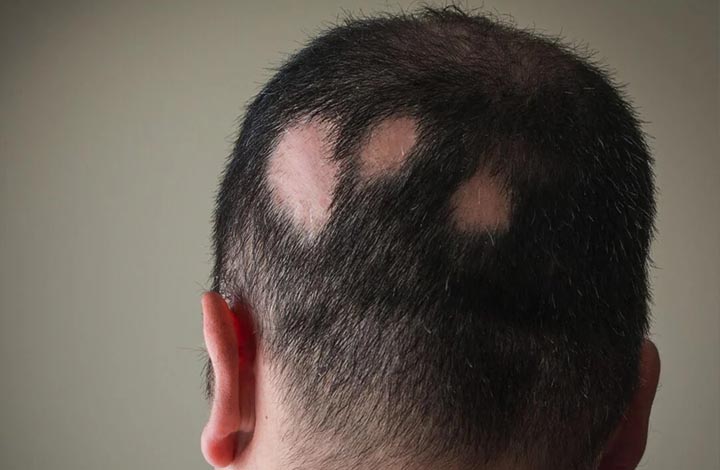
Alopecia is an Auta or “coin hair loss” is an autoimmune disorder in which the immune system attacks the follicles and creates rounded pieces of hair (and sometimes eyebrows and beards). Its onset is usually sudden and does not know a particular age and sex; In some people, it remains one or more pieces, and in others it experiences recurrence and recovery. Physical and mental stress, some infections and genetic backgrounds can play a stimulant, but the exact cause in each person is different.
The diagnosis is derived from the clinical examination of a dermatologist and is complemented by tools such as trichoscopic or limited tests. To keep track of the disease process, medical teams record the severity of head skin involvement (used in the clinics, a scale called Salt), so that they can make a more fair judgment before and after treatment. The lower the percentage of the conflict, the more effective the treatment is. We have fully explained the symptoms and process of treatment for coin hair loss (alopecia.
Treatment is based on the breadth of conflict and the speed of progress. In limited cases, injections inside the lesion or topical corticosteroid products under the supervision of a physician help return hair growth and sometimes use topical immunotherapy. Auxiliary care, such as stress management, nutritional deficiencies, and regular follow -up are important because the disease can be a periodic. Clinical guides and browsers published in the Journal of the American Academy of Dermatology and educational resources such as Statpearls (1) confirm this step approach.
In recent years, new targeted drugs have been promising. The results of two major trials published in New England Journal of Medicine in year 6 showed that a group of patients with JAK route inhibitors were acceptable to the hair coverage in several months. Following the same evidence, the US Food and Drug Administration approved a few oral medications from this family for medium to severe cases. These treatments require a physician's immune monitoring and monitoring and are not suitable for everyone, but they can work differently in qualified patients.
When the shedding pattern is stabilized, the hair bank is sufficient and realistic expectations are defined, surgery can be a definite solution to hairless areas. The decision on the FUE/FUT/SUT technique and the variants, the design of the growth line, the number of grafts and costs must be personalized. To learn more about technique selection and cost estimation, see the methods and cost of hair transplantation in Shiraz.
2) Androgentic (Men's/Women's Pattern)
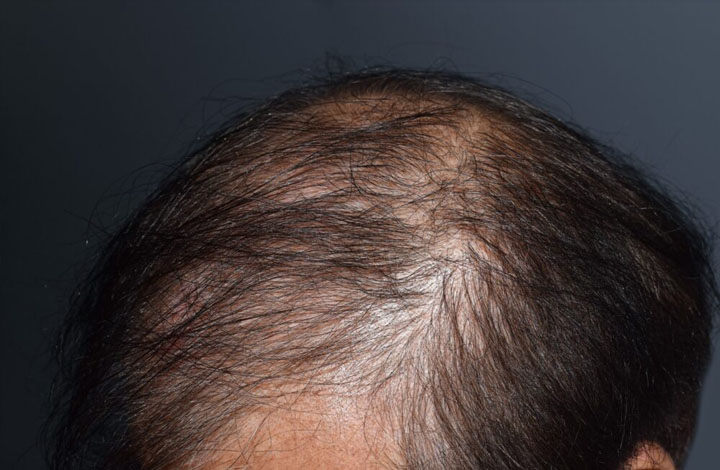
Androgenic alopecia or masculine/female pattern loss is the most common cause of gradual backwardness, and mostly due to the genetic sensitivity of follicles to androgens. In men, the hairline usually gradually goes back and the difference between the head is low; In women, the growth line is often preserved, but the disseminated backpack is seen in the middle area.
Numerically, epidemiological estimates indicate limits ۳۰٪ From men to the nearby ۳۰سالگی And about ۵۰٪ To ۵۰سالگی They experience some degree of baldness pattern, and in some populations “the prevalence of the lifelong” even to the extent. ۸۰٪ Reported; In women, the female form is also more common with age, and according to recent browsing, About 1–2 % Women experience some degree of life throughout life.
Diagnosis is performed by a specialist examination (and if needed tricoscopy) and treatment is usually compound and long -term: proper care and medications are basic, and when the pattern is “sustainable” and the hair bank is appropriate, hair transplantation can be decided.
2) Telogen Eflovium
Telogen Aflovium is a sudden increase in scattered hair loss, which usually occurs 2 to 3 months after a stimulus such as fever or severe illness, surgery, childbirth, large stress, a harsh diet/weight loss, some medications or deficiencies such as iron.
In this case, the share of the head phase of the head rests from about 1–2 % to 1 % or more, and the loss is “high” but unrivaled; In the examination, the “hair tension test” is often positive in all areas. In terms of the course of the disease, the “acute” form usually subsides within 4-5 months by removing the underlying factor and the hair growth goes back to the natural cycle; If the fall continues for more than 6 months, it is called “chronic”.
Practical management means identifying and correction of stimulants (eg, treatment of thyroid disorder or iron deficiency anemia compensation), mild hair care and follow -up; Medications have an auxiliary role and the decision should be made by a physician. This description is based on review sources and clinical guidelines: Statpearls 2024 (definition and stimuli), British Association of Dermatologists (Increased Telogen's Hair and Delayed with Many months), JCAD 2024 (acute/chronic and 2 -month -old windows), and Jaad/Ijdvl research
2) Anagen Eflovium
Anagen Eflovium is the sudden and emissions of the hair that usually begins one to three weeks after the start of chemotherapy and can also affect the eyebrows, eyelashes and hair; The main cause is the damage of cytootoxic drugs (especially cucumbers and anthraciclines) to the high -on onion cells, and therefore severe and rapid hair loss occurs. Better news is that in most patients, after the end of the treatment, re -growth begins within about 2-5 months – though the tissue and hair condition may be temporarily different, and in a minority of specific diets, a durable thinning. This description is consistent with the consensus of skin reference sources and oncology (Statpearls 2024, reviews at Current Oncology, and MASCC/ESMO forums at 1).
To prevent as much as possible, “cooling of the skin” when injecting chemotherapy is a good way to have a good evidence behind: In a multi -central trial published in JAMA 2017, the preservation of hair in the cooling group was significantly greater than the control group; Browsers and subsequent updates have also confirmed the risk of falling down by this method, although acceptance of it is limited due to discomfort in some patients. Overall, the practical path in anagen Aflovium includes training and psychological support, managing expectations about the timing and re -growth, and, if possible, the skin cooling according to the health center protocol.
2) Alopeccicated Oscar
Alopecia is a “diagnostic umbrella” for a group of falls in which prolonged inflammation damages the onion and replaces it; Therefore, a folly that has been destroyed again does not produce hair again and is the purpose of treatment, stopping inflammation and maintaining healthy areas, not returning the hair. This is clearly stated in Jaad educational and clinical reference sources. Early diagnosis is vital and usually by examination, tricoscopy and in the “active” area with targeted biopsy; Because clinical and histological findings can make it difficult to diagnose
In terms of categorization, according to Nahrs classification, the “initials” are divided into lymphocyte, neutrophilic or mixed according to the type of inflammatory miracle; The most common lymphocyte subgroups, including Likn Plan Pillarris (LPP) and Lupus Discovery of the Scalp (DLE), can cause permanent fall by remnanting of flat and non -follicular areas.
In general, Oscar alopecia make up about 1-5 % of all hair loss. In some populations, CCCA (centralized central Oscar) is more common and even genetic bond with Padi3 has been reported in NEJM 2019
Non -surgical treatments (basic and supplement)
PRP Plack Plasma: Platelet:
Recent research shows that PRP usually increases hair density in the masculine/female pattern, but the thickening of the hair does not always increase. This result is also repeated in meta -analysis (PMC) and 1–2 (PUBMED). A few new reviews also say that the composition of the PRP with minoxidil works alone than each; However, the quality of the studies is not uniform (the difference in dose, sessions distance, and preparation method) and more positive results are likely to be published. Therefore, it is best to apply PRP as a personalized auxiliary therapy along with the main therapies and follow the result with regular visits. Complications are usually mild (such as pain or transient redness at the injection site).
Laser and Light Low intensity (LLLT)
According to scientific reviews, up to 1 (in journals such as PMC and Wiley) usually improves hair density and in many reports the hair strands slightly greater – especially in the masculine/feminine pattern. It has less effect on temporary post -stress or childbirth (Telogen Eflovium) and has a more helpful role than when it comes to its hair growth cycle.
In scarring such as LPP and FFA, more evidence is the case; Therefore, LLLT is a maximum auxiliary treatment for reducing inflammation and symptoms and does not replace anti -inflammatory drugs (reports and browsing of 1 to 2 in PMC and MDPI). Practical conclusion: The effect of LLLT depends on the regular use and settings of the device (power, wavelength, number of sessions); Protocols that have been implemented weekly and fixed have shown more stable results.
If you continue your main treatments, adding LLLT can improve the appearance of the hair, but the miraculous outcome is not reasonable.
Post -treatment care
Post -Surgery Protocol of Hair Loss (Topical/Oral Minoxidil, Finosteride/Dotteride, PRP, Mesotherapy, and LLLT)
Care should be tailored to the intervention and aimed at reducing complications, therapeutic adherence and fair response evaluation. These recommendations are based on the collection of the American Academy of Dermatology and British Association of Dermatologists and browsers published in Jaad and Statpearls.
The first 2 hours: Avoid skin wash, heat and hypertension in injectable treatments (PRP/mesotherapy); Redness or mild transient sensitivity is expected. In the use of topical minoxidil, the wash and wash will be delayed at least four hours and avoid arbitrary interruption. In LDOM and Finasteride/Dotteride, regular consumption is recommended at the same time and any unusual complication should be recorded.
First Week: Mild wash with low water pressure; Avoid severe sweating, swimming, sauna and mechanical pressure on the skin. In injectable interventions, the injection site is forbidden. In medicinal therapies, monitoring of the initial complications and the patient's education about Expectations is essential.
Months 1 to 2: The “initial” decline in some treatments (especially with the onset of minoxidil) may occur and is typically transient. Assessment of the answer is not recommended earlier than the end of the third month. Registering standard periodic photos and controlling contextual factors (such as iron deficiency or thyroid disorders) is part of the follow -up.
Months 1 to 2: Clinical indexes (density and appearance of hair) are expected to improve gradually. At this point, treatment review is necessary: continuing effective diet, dose adjustment, adding auxiliary treatment (such as LLLT) or changing strategy based on response evidence.
Alert Indicators: Increased pain, fever, stinking, emissions and warmth of the skin, persistent bleeding, or unusual systemic reactions require urgent evaluation. In case of any of the above, treatment is not recommended until re -examination.
Conclusion
The key to successful treatment of hair loss is the exact diagnosis of the type of loss and the treatment of stage treatment: from lifestyle modification and medication to the right time for surgery. If the hair bank is appropriate and the expectations are properly set, the surgical results can be stable and natural.
This is compiled in collaboration with the Rose Clinic. You can refer to the above guide to check out individual conditions, expert advice and viewing sampling.
[ad_2]
منبع