

[ad_1]
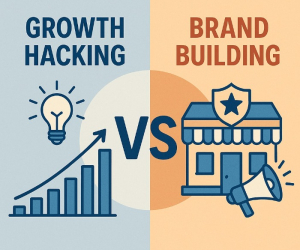
Marketers often regard these two approaches as opposed poles and focus on one of them in their marketing activities.
Simin Latifi, a marketing expert (Linkedin), believes that these two approaches are actually complementary to each other, and that in the vision of digital marketing in year 2, only successful businesses will be able to establish a clever balance between the two.
Growth hack: rapid growth with focus and creativity
Growth Hack is a term that was first introduced by Sean Ellis in Year 2. In fact, it is an approach in marketing and product development that focuses on rapid and sustainable business growth, usually through creative and low -cost strategies, and its aim is to find rapid, low -cost and data -based methods for rapid growth of a business. This strategy is usually found in startups or companies looking for rapid scalability.
The main features of growth hacking:
- Focusing on the quick absorption of the user: Growth hack tries to attract maximum users with minimal resources.
- Permanent testing and optimization: Implementation of A/B tests, conversion rate analysis and campaign adjustment based on instant results.
- Tactical creativity: Using low -cost but influential techniques, such as user invitation, viral marketing, and using existing platforms (for example, Airbnb with the ability to publish ads by users on Craigslist, which was a famous ad publisher site, used high traffic for free and fast users to its users.
Simin Latifi says:
“Hacking growth has significant advantages; Including the possibility of achieving rapid growth in the shortest time and at a low cost. However, this approach also has disadvantages; Like over -dependence on short -term tactics, a possible reduction of user experience quality and ignoring the importance of brand building. “Based on my experience in the implementation of advertising campaigns in international markets, I have come to the conclusion that the combination of growth hacking with targeted branding activities and brand awareness campaigns will be a safer path for long -term business success.”
Branding: Sustainable Construction of trust and loyalty
Branding or Brand making Unlike growth hack, it is a gradual and deep process. This approach focuses on the brand's mental image, confidence and market distinction.
Key Components in Branding:
- Brand identity: Includes brand names, logos, colors, sound tone and brand philosophy.
- Storytelling: Storytelling: A unique narrative that makes the brand human and memorable.
- Customer Experience: Brand interaction must be integrated, pleasant and lasting at all points.
Why is branding vital?
Brands that focus solely on fast absorption tactics usually face the problem of loyalty and users in the long run. But the brands that have a specific story provide a privileged experience and offer a value beyond the product to the audience, they can remain in the customer's mind and heart.
Confrontation or synergy?
At first glance, these two approaches are contradictory. But in reality, for sustaining success must be they Supplementary Consider.
Direct comparison:
| Factor | Growth hack | Branding |
| Impact time | Shortly | Long -term |
| Priority | Rapid growth | Loyalty and trust |
| Tools | Data, testing, automation | Content, design, customer experience |
| Measurement criterion | Conversion rate, cac, audience growth |
Brand value, NPS, LTV |
Combined model in practice
Simin Latifi offered the following combination model for the success of brands in year 2.
- Double -phase funnel: The first phase uses growth hacking techniques to attract user, but branding is immediately involved in maintaining and converting them to a loyal customer.
- Testing and Storytelling: Based on the data, the marketing team decides what contents are most interacting, then developing those content in the form of brand narrative.
- Brand awareness through growth: Sometimes a successful growth hacking campaign can increase brand public awareness. Like the CLUBHOUSE or Invite Code in Gmail.
Future Path: Why is Year 2 different?
Simin Latifi added: “Given the fierce competition in international markets, the accelerated growth of technologies such as artificial intelligence, and the massive volume of different brand advertising targeting users, it has become more difficult and challenging than ever. Based on my personal experience in the implementation of advertising campaigns over the past years, it is no longer possible to achieve acceptable conversion rates in the past year; Rather, we need a more integrated and intelligent approach that focuses on rapid growth and the construction of a lasting brand, so the success of a brand can be guaranteed in both the short and long term. “
Conclusion
There will be no successful brand in 2, with only one of these two paths. Companies that simply think about rapid growth may be weak in branding, and vice versa, brands that only think of imagery are left behind. The balance between growth hacking and branding philosophy is the key to future digital marketing success.
[ad_2]
منبع